


How Much Do Flu Vouchers Cost? Employer Pricing for 2026/27
Published: July 27, 2026
Last Updated: August 5, 2026
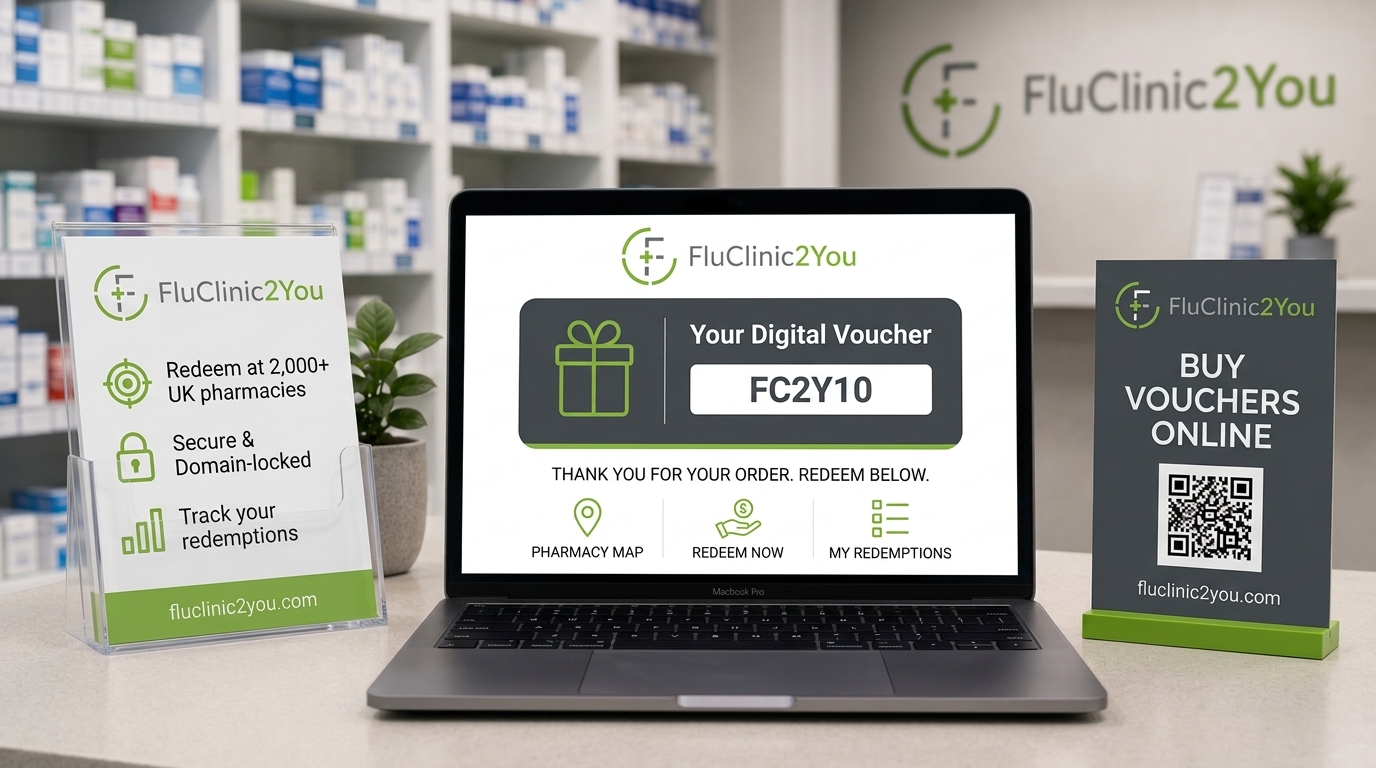
For the 2026/27 season, flu vouchers cost from £10.50 to £23 each on pre-pay, depending on how many you order, or £18.95 each on pay-per-activation, where you pay only for the vouchers your staff actually redeem. If you are working out how much flu vouchers cost for your team, those are the two numbers that matter, and which one is cheaper comes down to your headcount and how many people take up the offer.
The price covers the flu vaccination itself, given at any of more than 2,000 participating pharmacies. There is no separate consultation fee to add on. Below we break down both pricing models, show a worked example, and explain what is included, so you can budget with confidence. For the full buying process, see our complete guide to buying flu vouchers.
Pre-pay flu voucher prices for 2026/27
Pre-pay is the traditional model: you buy a set number of vouchers upfront, and the more you buy, the lower the price per voucher. It suits businesses that are confident most of their staff will take up the offer.
The jump from £23 to £11.50 once you reach ten vouchers is the biggest saving, so even small teams are usually far better off ordering ten or more. Most corporate orders sit in the £11.50 band, with the £10.50 rate reserved for large employers buying a thousand or more.

Pay-Per-Activation: only pay for what is used
With pay-per-activation you are charged £18.95 per voucher, but only for the ones your staff actually redeem, subject to a minimum of 25 activations. You share the code with everyone, and if only some people use it, you only pay for those. It removes the risk of paying for vouchers that go unused.
The per-voucher headline is only half the story. What decides your total cost is how many people get vaccinated, which is where a worked example helps.
A worked example: what a real order costs
Say you have 200 employees. On pre-pay you would buy 200 vouchers at £11.50 each, a total of £2,300, and you own all 200 whether or not everyone redeems. On pay-per-activation, if 60% of staff take up the offer, that is 120 vouchers at £18.95, a total of £2,274. At that uptake the two are almost level.
Now change the uptake. If only 40% redeem, pre-pay still costs £2,300, but pay-per-activation drops to 80 activations at £18.95, which is £1,516. If 80% redeem, pre-pay is unchanged at £2,300 while pay-per-activation rises to 160 at £18.95, which is £3,032. The pattern is clear: the lower and less certain your expected uptake, the more pay-per-activation saves.
You can run these numbers for your own headcount and expected uptake using the calculator on our full corporate flu voucher buying guide.
What is included in the price
The per-voucher price is the whole cost of the vaccination. There is no separate booking or consultation charge for the employee to pay, and nothing changes hands at the pharmacy counter because the voucher is pre-paid.
Because vouchers are digital, there are no print or postage costs to factor in. You place one order, receive one code, and share it with your team.
How to keep the cost down
Two things shape what you ultimately spend: the price band you buy in, and how many vouchers get used. Ordering ten or more moves you off the small-order rate straight away. Matching your model to your expected uptake, pre-pay for a keen workforce or pay-per-activation for an uncertain one, avoids paying for vaccines nobody takes. Good internal communication lifts redemption, which protects more staff for the same budget.
The full corporate flu voucher buying guide covers ordering and both plans in one place. If you are comparing vouchers with an on-site clinic on cost, our guide to flu vouchers versus on-site clinics sets the two side by side.
How many vouchers should you order?
The question that decides your budget is usually not the price per voucher but how many to buy. Order too few and you are topping up mid-season. Order one for every employee and you may be paying for vaccinations that never happen.
If you have run a scheme before, last year’s redemption figure is the most reliable guide you have. If this is your first year, it is sensible to plan for the uptake you can realistically expect rather than your full headcount, because take-up is rarely total.
There are two ways to protect yourself. On pre-pay, order to your expected uptake rather than your headcount and top up if demand runs higher than planned. You are notified before your balance runs low, so topping up rarely becomes urgent. On pay-per-activation the question largely disappears: you share the code with everyone and pay only for the vouchers actually redeemed, subject to the minimum of 25 activations.
Whichever route you choose, ordering earlier in the season gives your staff the longest possible window to redeem, and vouchers run through to March.
Frequently asked questions
How much do flu vouchers cost in 2026/27?
Pre-pay vouchers are £23 for 1 to 9, £11.50 for 10 to 999, and £10.50 for 1,000 or more. Pay-per-activation is £18.95 per redeemed voucher, with a minimum of 25 activations.
Is there a cheaper option for a small team?
Ordering ten or more vouchers drops the price from £23 to £11.50 each, so small teams usually save significantly by ordering at least ten rather than a handful.
Is pre-pay or pay-per-activation cheaper?
Pre-pay is cheaper per voucher and wins when most staff redeem. Pay-per-activation costs more per voucher but nothing for unused ones, so it wins when uptake is low or uncertain. Around 60% uptake is the rough break-even point.
Are there any hidden costs?
No. The per-voucher price covers the vaccination in full, with no separate consultation fee and nothing to pay at the pharmacy. Vouchers are digital, so there are no print or postage costs.
Is there a minimum order?
Pre-pay orders can start from a single voucher, though ordering ten or more gets the lower rate. Pay-per-activation requires a minimum of 25 activations.
How long do we have to use the vouchers?
Vouchers are valid for the whole flu season, from September to March, so staff have plenty of time to redeem before they expire.